

If you’re a homeowner, chances are you’ve found yourself staring at a crack in your basement wall, wondering if it’s a quick DIY job… or the start of something a lot bigger. We get it. Cracks are unsettling. They show up uninvited, they spread without warning, and they make you second-guess the integrity of your entire home.
So let’s tackle the big question head-on: What’s the best foundation crack repair method?
Like most things in the real world, the answer isn’t one-size-fits-all. It depends on what’s causing the crack, how bad it is, and what you want out of the repair—quick patch, or permanent fix.
At HydroHelp911, this is our bread and butter. We’ve seen every type of foundation crack you can imagine—from hairline shrinkage cracks to wide, leaking fractures that go straight through the wall. And we’ve fixed them all.
Let’s walk through the best foundation crack repair methods available, how each one works, and when it makes the most sense to use them.
For more information, see Hairline vs Structural Cracks.

First, Why Do Foundation Cracks Even Happen?
Cracks are your foundation’s way of crying out for help. They don’t just show up randomly.
Here in North Carolina, the biggest culprits we see include:
- Foundation settlement — when soil shifts or sinks beneath your home
- Hydrostatic pressure — when water builds up against the outside of your basement wall
- Concrete shrinkage — a natural part of curing that creates tiny surface cracks
- Frost heave and temperature swings — freeze-thaw cycles wreak havoc on rigid concrete
- Poor drainage or grading — water hanging around the foundation causes long-term damage
Once a crack forms, it doesn’t usually fix itself. That’s where we come in—with the right foundation repair solution for the job.

Foundation Crack Repair Methods
Epoxy Crack Injection
Best for: Dry, non-moving cracks in poured concrete
Not ideal for: Wet, actively leaking cracks or flexing foundations
Let’s start with the surgical tool of the crack repair world: epoxy crack injection.
Epoxy is like liquid steel. It’s injected under pressure directly into the crack, where it fills the void and then hardens into an ultra-strong bond—stronger than the concrete around it, in most cases.
Why epoxy works:
- Restores the structural integrity of the wall
- Penetrates deep into thin cracks
- Works well for vertical or diagonal cracks
But here’s the catch:
- Epoxy won’t stop water from entering the wall
- It’s not flexible—if the wall shifts again, the crack can reappear
We typically recommend epoxy when the wall is stable, dry, and the homeowner wants a long-lasting structural fix.
Polyurethane Foam Injection
Best for: Leaking, moving cracks in poured concrete or block walls
Not ideal for: Structural cracks needing reinforcement
If epoxy is liquid steel, polyurethane is like flexible insulation foam—with a mission.
Polyurethane foam injection works by expanding inside the crack, forming a waterproof seal that moves with the wall over time. It doesn’t fix structural problems, but it’s a great choice for stopping water in its tracks.
Why polyurethane is a go-to for leaks:
- It seals active water leaks
- Remains flexible—perfect for shifting or settling foundations
- Fills irregular gaps and voids
When to use it:
- You’ve got water coming through the crack
- The crack is getting worse seasonally
- You want a fast, effective waterproofing fix
At HydroHelp911, we often use polyurethane injection as part of a larger foundation repair solution—especially when paired with structural reinforcement or exterior drainage.
Crack Sealing (Surface Sealants)
Best for: Hairline cracks not leaking or affecting structure
Not ideal for: Deep, structural or wet cracks
Let’s be clear—crack sealing is like putting a Band-Aid on a problem. It hides the symptom, but doesn’t fix the cause.
Still, it has its place.
Surface crack sealants (like masonry caulks or waterproof paints) can stop water intrusion and help prevent cracks from worsening—but they’re best for minor cosmetic issues or as a temporary fix.
Use crack sealing when:
- The crack is less than 1/8 inch wide
- You’re prepping for a larger repair later
- You want to protect the area from surface water exposure
Crack sealing is not a cure. It’s just part of a larger system—especially when we’re talking real foundation crack repair.

Carbon Fiber Reinforcement
Best for: Structural cracks in bowing or flexing foundation walls
Not ideal for: Hairline or superficial cracks
Here’s where things get serious.
If your basement wall is bowing inward—or cracks are forming in a “stair-step” pattern along concrete blocks—carbon fiber straps are one of the strongest, cleanest, and most effective fixes available.
They’re ultra-thin, practically invisible after install, and permanently stabilize foundation walls.
Benefits of carbon fiber:
- Won’t stretch, bend, or break
- Keeps cracked walls from moving further
- Installed with minimal disturbance
- Lifetime warranties available
We use this method when structural support is needed—often in tandem with crack injection or exterior water control.
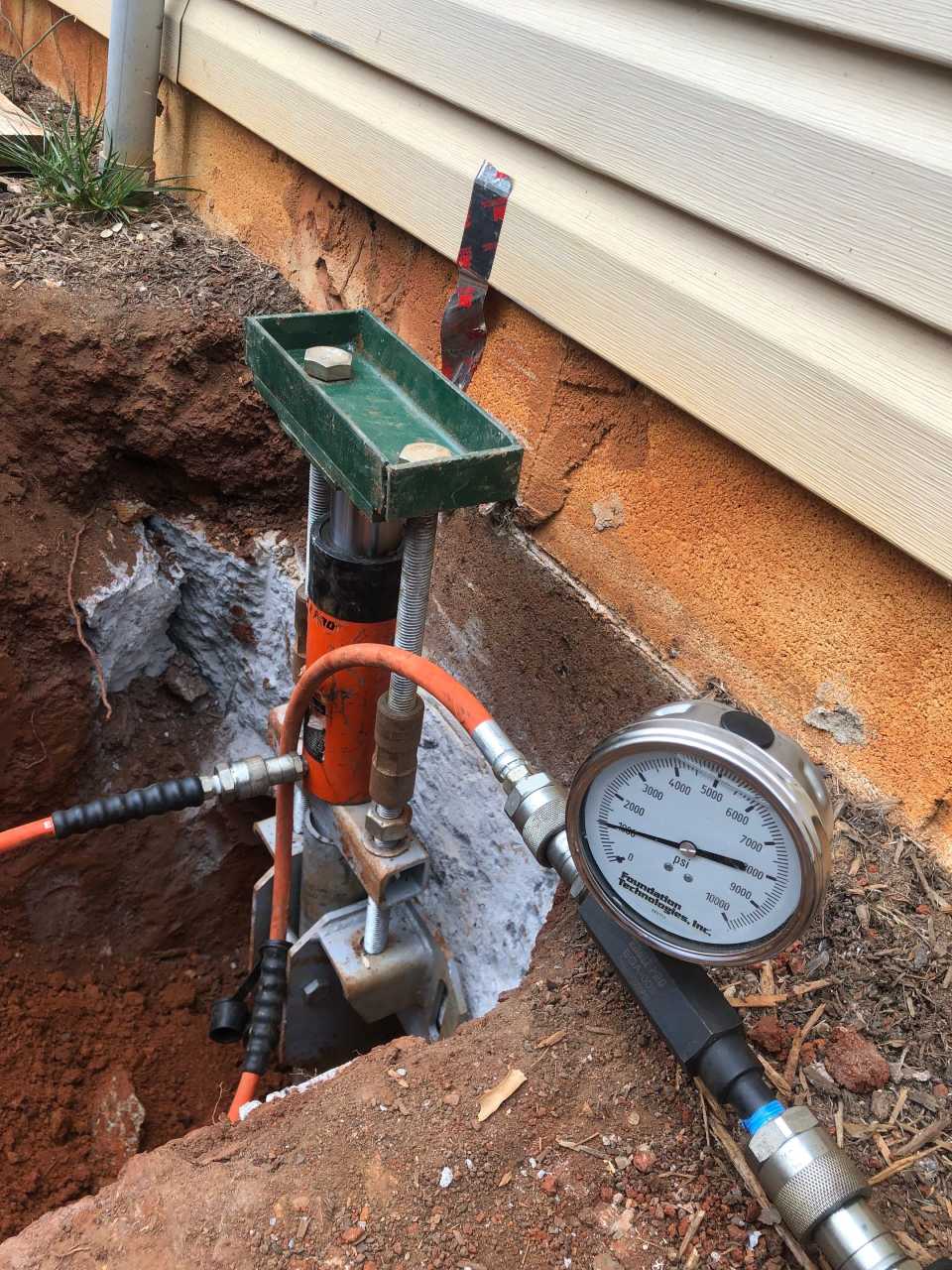
Wall Anchors & Pier Systems
Best for: Severe foundation settlement, major horizontal cracks, sinking foundations
Not ideal for: Hairline, cosmetic cracks
When a crack is just the symptom of deeper foundation movement, it’s time to go below the surface—literally.
Our foundation pier systems (helical or push piers) are driven deep into stable soil, bypassing the unstable top layers causing the problem. Once installed, they lift and support the foundation, preventing further cracking and restoring stability.
These methods aren’t about patching cracks. They’re about fixing the entire foundation.
Same goes for wall anchors, which pull a bowing wall back into place and stabilize it permanently.
If you’ve got cracks alongside:
- Uneven floors
- Doors that stick
- Noticeable settlement or tilting
…this is likely the route we’ll take. It’s the most comprehensive foundation repair solution for serious cases.
So… What’s The Best Foundation Crack Repair Method?
Here’s the truth: There isn’t one best method.
The best foundation crack repair method is the one that fits your situation, soil, structure, and budget.
That’s why every repair HydroHelp911 does starts with a free inspection and custom plan. We look at the entire structure, not just the crack, and recommend a solution that actually fixes the problem long-term—not just covers it up.

Our Process: How We Do It Right
- We inspect the entire foundation — inside, outside, and below the surface
- We identify the cause — soil movement, water intrusion, poor construction, etc.
- We customize the solution — from injection to full stabilization systems
- We do the job right the first time — with trained crews and warrantied systems
- We keep you informed — no pressure, no surprises, just real solutions
Summary
What’s the best foundation crack repair method?
It depends on the type and cause of the crack. Epoxy crack injection is best for dry, structural cracks, while polyurethane foam injection works better for active leaks and flexible movement. Carbon fiber reinforcement is ideal for structural cracks in bowing walls, and pier systems or wall anchors are needed when cracks result from serious foundation settlement. HydroHelp911 offers customized foundation crack repair solutions in Charlotte, NC to match your home’s specific needs.
Don’t Let a Crack Become a Crisis
It starts with a line in the wall. Then a little water shows up. Then the floor gets uneven. Before long, that small foundation crack becomes a big-time headache.
Let’s stop it before it gets there.
Schedule your free foundation inspection with HydroHelp911 today.
We’ll assess the crack, explain the options, and give you a clear, honest path forward—whether it’s a simple seal or a full structural solution.