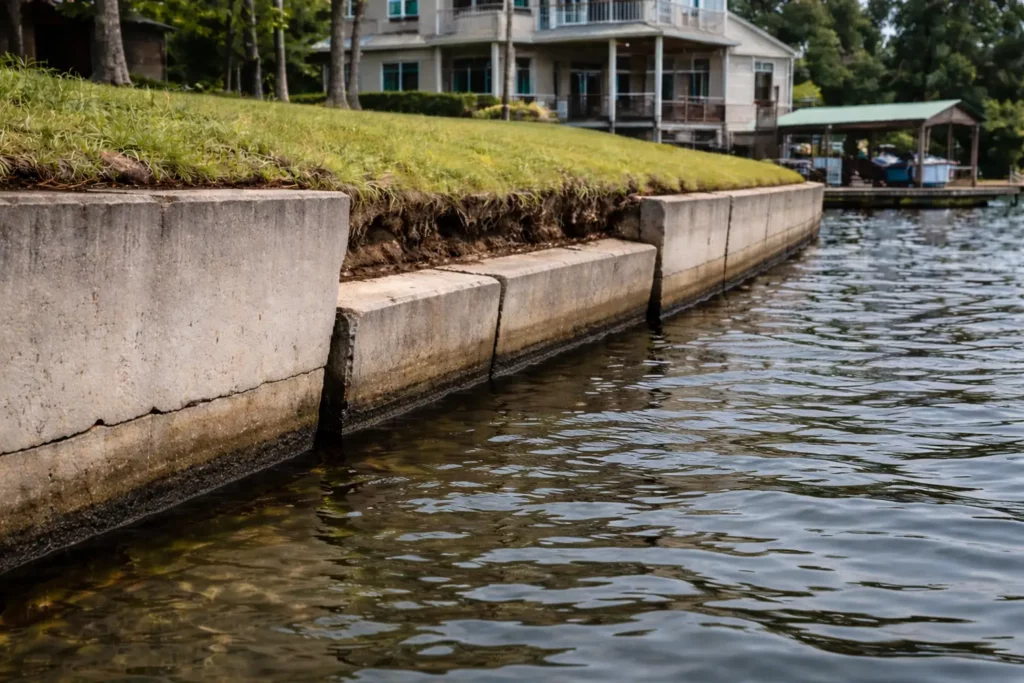
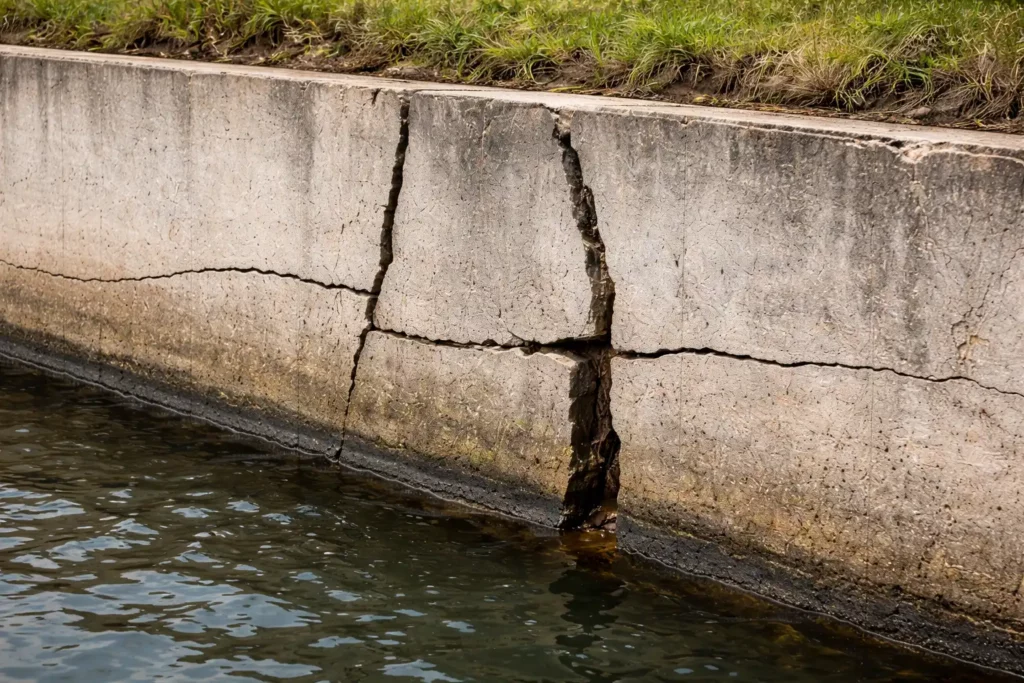
A failing seawall can crack, tilt, and allow washout behind seawall sections. These signs of seawall failure threaten your shoreline, landscaping, and nearby structures. Identify damage early and take action before minor issues turn into major structural repairs.
Spot Damage Before Shoreline Loss Accelerates
Seawalls protect your shoreline from constant water pressure and soil movement. Over time, that pressure causes stress fractures and hidden erosion. These small issues often signal larger structural problems.
A cracked seawall may look minor at first. Hairline fractures can widen as water seeps inside. Once moisture penetrates the structure, internal deterioration speeds up.
You may also notice a tilting seawall or gaps forming behind it. Washout behind seawall sections weakens the soil that supports the structure. Without repair, collapse becomes a real risk.
Act Early Before Structural Damage Spreads
Seawall damage rarely happens overnight. A small crack or minor soil void can quickly turn into a tilting seawall or major washout behind seawall sections. Identify these warning signs early to avoid structural failure and costly reconstruction.
Visible fractures allow water intrusion and weaken structural integrity over time.
A tilting seawall signals soil movement and pressure building behind the structure.
Soil erosion creates voids that reduce support and increase the risk of collapse.
Persistent moisture suggests drainage failure and internal deterioration.
Schedule an inspection at the first sign of seawall problems.
Proudly Serving Charlotte, NC, and the Surrounding Region.
At HydroHelp911, we’re not just foundation and waterproofing experts—we’re your neighbors. We’ve proudly helped thousands of homeowners across North and South Carolina protect their homes from structural and moisture damage with local, tailored solutions that work.
Major Structural Damage Requires Immediate Action
Some signs of seawall failure indicate advanced structural breakdown. Large cracks, aggressive tilting, and significant washout behind seawall sections indicate the structure may no longer have adequate soil support. Immediate seawall repair helps prevent collapse and shoreline loss.
Clear Answers For Concerned Waterfront Property Owners
Learn what cracked, tilting, or leaking seawalls mean for your property. These answers help you understand when to schedule professional seawall repair and protect your shoreline.
Common signs of seawall failure include visible cracks, leaning or tilting sections, and washout behind seawall panels. You may also notice sinkholes near the shoreline or water seeping through joints. These issues signal structural stress that requires professional evaluation.
Yes. A cracked seawall or bowed wall section often indicates soil pressure or erosion behind the structure. As water builds up and soil shifts, the wall loses support. Without repair, structural failure and shoreline collapse become real risks.
Water seepage and washout behind seawall structures can weaken the soil supporting the wall. Over time, voids develop, and sections begin to tilt or crack. Early intervention prevents costly reconstruction and stabilizes the shoreline.
Inspect your seawall at least once per year and after major storms or flooding. Regular inspections help identify early signs of seawall failure, including cracking, movement, or soil erosion. Early detection reduces repair costs and extends structural life.
Yes, minor cracks or small erosion areas can often be repaired before they spread. Addressing a failing seawall early prevents larger structural repairs. Prompt action stabilizes the wall and protects your shoreline investment.
Protect Your Shoreline Before Damage Gets Worse
A cracked seawall, tilting sections, or washout behind seawall panels will not fix themselves. Our team inspects shoreline structures, identifies signs of seawall failure, and recommends targeted repairs to stabilize and protect your waterfront property.
Call now or book online to secure your seawall inspection.