


Here’s a scene a lot of homeowners know too well: You head down to the basement for a load of laundry… and spot a crack running across your foundation wall. Maybe it’s dry. Maybe it’s weeping water. Either way, your stomach drops.
“Is this a big deal? Can I seal it myself? Do I need to call someone?”
We hear these questions every day at HydroHelp911. And the truth is this: Not all cracks are created equal—and neither are the methods used to seal them.
Today, we’re breaking down the two most common foundation crack repair methods: Epoxy crack repair vs polyurethane injection.
Both can fix foundation cracks—but each has a different job. And picking the wrong one? That’s like trying to patch a leaky tire with duct tape. Might hold up for a bit, but you’re gonna be back on the side of the road soon enough.
Let’s dig into it.

Why Foundation Cracks Form in the First Place
Before we talk solutions, let’s talk causes. Foundation cracks usually come from one of three things:
- Shrinkage – Concrete naturally shrinks as it cures, creating hairline cracks.
- Settlement – Your home shifts as the soil underneath moves (thanks to rain, drought, or poor grading).
- Pressure – Water pressure from the outside (hydrostatic pressure) forces its way through your walls.
The type of crack tells us a lot about what’s going on. And depending on the severity, foundation crack sealing might do the trick—or you might need something more robust like wall reinforcement or piers.
But if you’ve caught it early and the crack isn’t structural, sealing it properly can prevent major problems down the road.

Crack Repair Method #1: Epoxy Crack Repair
Let’s start with epoxy. Think of epoxy like the super glue of the foundation world—except stronger, way more expensive, and engineered to bond concrete back together.
How it works:
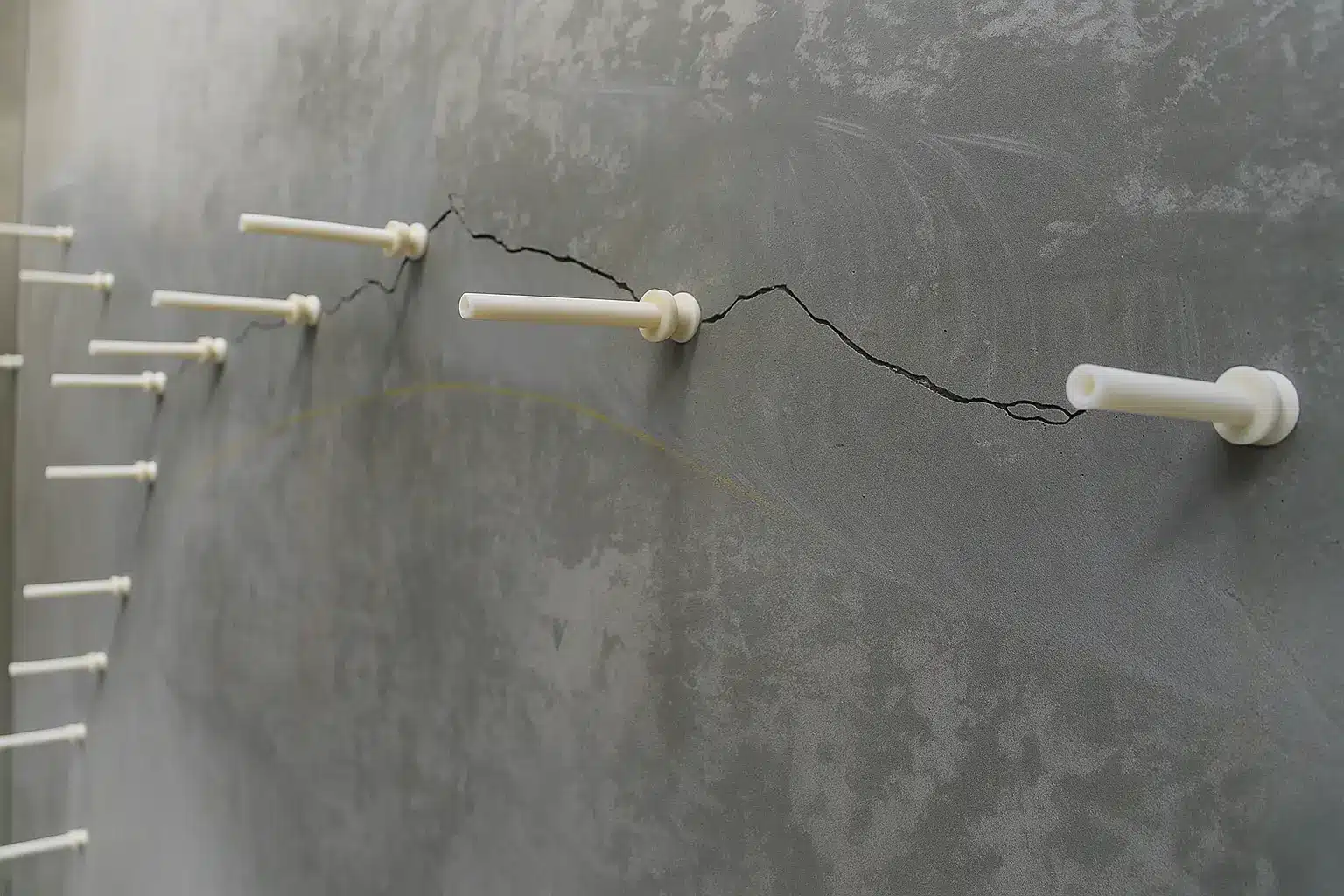
We clean out the crack, install injection ports, and pump in two-part epoxy resin under pressure. Once it cures, it forms a bond that’s stronger than the original concrete.
Best for:
- Dry cracks
- Vertical or diagonal cracks from shrinkage or minor settling
- Cracks that need structural reinforcement
Not ideal for:
- Wet or actively leaking cracks
- Cracks that are still moving or flexing
- Very wide or irregular cracks
Pros of epoxy crack repair:
- High-strength bonding—can restore structural integrity
- Penetrates deeply into fine cracks
- Long-lasting (when conditions are right)
Cons:
- Doesn’t stop water if the crack is still leaking
- Brittle—can re-crack if the foundation moves again
- Takes longer to install and cure than polyurethane
Bottom line:
If the crack is dry and the wall is stable, epoxy is a strong, permanent fix.
Crack Repair Method #2: Polyurethane Injection
Now let’s talk about polyurethane—the flexible, expanding foam used to seal cracks that are leaking or at risk of shifting.
It’s not as rigid or strong as epoxy—but it’s waterproof, flexible, and quick to install.
How it works:
We inject a flexible polyurethane resin into the crack. As it reacts with moisture, it expands and fills the void, creating a watertight seal that can flex with the wall as it shifts over time.
Best for:
- Leaking cracks or those exposed to moisture
- Active cracks that may expand or move
- Concrete block walls, poured walls, basement slabs
Not ideal for:
- Major structural repairs
- Bone-dry cracks that need rigid bonding
Pros of polyurethane injection:
- Expands to fill gaps and voids completely
- Great for wet or weeping cracks
- Flexible—won’t re-crack with seasonal movement
- Fast cure time, minimal disruption
Cons:
- Doesn’t restore structural strength
- May not bond well in very dry cracks without pre-wetting
- May need re-application in extreme movement scenarios
Bottom line:
Polyurethane is the go-to solution for waterproofing cracks and controlling moisture intrusion. It’s less about structure and more about keeping your basement dry.
How Do I Know Which One I Need?
That’s where we come in. There’s no universal rule—but here’s a cheat sheet:
| Crack Type | Best Method | Why |
| Hairline crack, dry | Epoxy | High strength, bonds wall together |
| Active water leak | Polyurethane | Expands & seals against moisture |
| Bowing wall with cracks | Neither (structural repair needed) | You need reinforcement like carbon fiber or anchors |
| Cracks reappearing after repair | Polyurethane or hybrid | Flexibility is key in moving walls |
A trained foundation expert will assess:
- The direction of the crack
- Width and depth
- Moisture conditions
- Underlying causes (settlement, pressure, etc.)
At HydroHelp911, we evaluate the entire foundation system—not just the crack—and build a repair plan that makes sense for your home, not someone else’s.
For more information, see Cracks in Basement Walls. What Do They Mean?

Foundation Crack Sealing: What It Isn’t
Let’s clear something up: Crack sealing isn’t always the whole answer.
If your foundation has structural movement, sagging floors, or repeated cracks, sealing won’t solve the root issue. You might need:
- Helical piers to stabilize a sinking foundation
- Carbon fiber reinforcement for bowing walls
- Interior or exterior drainage systems to relieve hydrostatic pressure
We’ve seen too many homeowners waste time (and money) on sealants when the real fix is deeper. That’s why we start with an honest inspection—no scare tactics, no upsell games.
Can I Seal Foundation Cracks Myself?
Technically? Sure. Should you? Maybe not.
DIY kits from the hardware store usually contain low-grade polyurethane foam that works okay on surface-level cracks. But they lack the pressure injection systems, depth penetration, and reliability of professional systems.
And here’s the kicker: If the crack is structural or leaking heavily, a DIY fix might hide the symptom—while the problem grows.
If peace of mind is the goal, it’s worth calling in pros who do this every day.
For more information, see Fixing Foundation Cracks From the Outside.
Summary: Epoxy vs Polyurethane
How do you seal foundation cracks, and what’s the best method?
The two most common foundation crack repair methods are epoxy crack repair and polyurethane injection.
- Use epoxy for dry, structural cracks—it bonds concrete and restores strength.
- Use polyurethane for wet or active cracks—it expands to seal leaks and flexes with wall movement.
HydroHelp911 offers professional foundation crack sealing across Charlotte, NC, with custom solutions that fit the specific type and cause of your crack.
Ready to Seal That Crack the Right Way?
Foundation cracks are like warning lights on your dashboard. Ignore them, and things only get worse. Seal them the right way—and your home stays safe, dry, and standing strong for years to come.
At HydroHelp911, we offer:
- Free inspections
- Honest, no-pressure advice
- Expert repairs using epoxy, polyurethane, or structural systems
We’ll tell you what’s needed—and what’s not.
Call now or book your free foundation inspection online. Your foundation deserves more than a patch job. Let’s fix it right.